A Reflection from Donald Brown for January 15th, 2023

The theme for the gospel for Christmas day was all about light and life, much like the Advent themes of joy, peace, love and hope. That theme of light rings through the readings for the whole season of Epiphany, the Twelve Days of Christmas.

The community scattered is not a safe place. To enter the world to be God’s light calls us to take risks, calls us to do new things in new ways, to engage in the world around us as God’s children.

The theme of light and life is nowhere more prevalent than in the gospel read on Christmas day, the prologue to the Gospel of John. Drawn from the creation account in Genesis that reads: In the beginning was the Word and the Word was with God. And God said Let there be light. This celebrates the coming of Jesus for in him was life and that life was the light of all people. That light and life is now embedded in the community of faith, the church.

The church, the community of believers is and can be a sign of life and light in the world, a sign of hope, the Kingdom of God in action. Consider the food collections for community care, and money for PWRDF and the crisis in the Ukraine. These are things that our parish and many other congregations support, a culture of giving to others as a sign of God’s light and love.

At the same time, however, there is a call for us to reshape the church, to reconsider the role of the church as God’s action in the world.

Many people are talking about the essential characteristics of the church. On end of a continuum the church is a worship community, a community gathered for prayer and fellowship and mutual support.

On the other end of the continuum the church must become an incarnation of God’s love and light in the world not just a giving community but a community which stands with the suffering and the oppressed. A community which works in the world to relieve injustice, poverty, violence, and pain.

These two images of church, gathered and scattered must coexist, clearly we cannot be just one or the other.

The community gathered is a safe place, sheltered in prayer and ritual, word and sacrament.

The community scattered is not a safe place. To enter the world to be God’s light calls us to take risks, calls us to do new things in new ways, to engage in the world around us as God’s children.

And thus let us pray today:
That the light of faith which we celebrate in the birth of Jesus will light up our words and deeds, and that God among us and light in the midst of us will bring us to light and life.

Readings And Collect For Epiphany 2023

Collect

Radiant Morning Star,
you are both guidance and mystery,
Visit our rest with disturbing dreams,
and our journeys with strange companions.
Grace us with the hospitality
to open our hearts and homes
to visitors filled with unfamiliar wisdom
bearing profound and unusual gifts. Amen.

Readings

Isaiah 60:1-6

Psalm 72:1-7, 10-14

Ephesians 3:1-12

Matthew 2:1-12

Reflection for Epiphany 2023 by Rev. Dr. Wayne Fraser

The Birth Narratives

(Reflection based on Marcus Borg & John Dominic Crossan’s The First Christmas)

Every year at Christmas we hear the stories of the birth of Jesus and watch enchanted as the children act out the familiar roles and events: angels sing to shepherds, Joseph & Mary journey to Bethlehem, the baby “wrapped in swaddling clothes and lying in a manger,” the wise men coming at the end with their gifts. This popular pageant is a combination of the two separate stories found at the beginning of the books of Matthew and Luke, the wise men from Matthew’s birth narrative tacked on to the end of the story of the shepherds from Luke. Every year we hear and enjoy the story of Jesus’s birth, but we never spend time talking about the meaning of the stories; we present the story to children, but fail to discuss them as adults.

The stories of the birth of Jesus are filled with even more meaning beyond the often overlooked political dimension outlined here: a story about hope (because all babies are about hope for the future); a story for ordinary people (because the angels appeared to shepherds); a story about a star (symbol of light in a dark world); a story about wise men (and the search for wisdom); a story about love (Mary and Joseph’s love for their baby born in dubious and uncertain times); and a story, above all, about peace and goodwill on Earth. We all need to hear the story with our hearts and minds and respond with our lives.


Now there is actually a third birth narrative, and it helps us understand the other two: this third reading is from the book of Revelation, the last book of the Bible, written by John of Patmos at the end of the first century of the Common Era:

Chapter 12 A great portent appeared in heaven: a woman clothed with the sun, with the moon under her feet, and on her head a crown of twelve stars. 2 She was pregnant and was crying out in birth pangs, in the agony of giving birth. 3 Then another portent appeared in heaven: a great red dragon, with seven heads and ten horns, and seven diadems on his heads. 4 His tail swept down a third of the stars of heaven and threw them to the earth.
Then the dragon stood before the woman who was about to bear a child, so that he might devour her child as soon as it was born. 5 And she gave birth to a son, a male child, who is to rule all the nations with a rod of iron. But her child was snatched away and taken to God and to his throne; 6 and the woman fled into the wilderness, where she has a place prepared by God, so that there she can be nourished for one thousand two hundred sixty days.

The tale is plainly mythological; it describes a woman about to give birth to a child “who is to rule all the nations.” A dragon waits to devour the child, but mother and child are rescued. The baby is clearly Jesus, and the dragon, the beast, is obviously Rome, the evil empire of that era, for later in the book of Revelation this same beast is described as a city built on seven hills that rules the world; in the first century, that could only mean Rome. Everyone knows the number of the beast, 666, and in numerology 666 stands for Caesar Nero, the emperor Nero, the first ruler of the Roman empire who actively persecuted the followers of Jesus.

This birth narrative by John of Patmos directly challenges Roman imperial theology, because the story mimics and subverts the story of the birth of Apollo, narrated in the myth of Apollo and Python. Apollo and his mother are threatened by the serpent Python but are rescued by Zeus; Apollo grows up and kills Python, thereby bringing light, order and reason to the world. The author of the Book of Revelation knows and echoes this story, but applies it to Jesus. In Roman theology, Apollo was the father of Caesar; all the Caesars of Rome are called “son of God” through Apollo. Nero, the beast, 666, sometimes even played dress-up as Apollo. John’s meaning is clear: Rome and its emperor are not Apollo, the bringer of light, but are Python, the ancient beast that seeks to destroy the light and to throw the world into darkness and chaos. The author of Revelation asserts instead that Jesus is the true light of the world. Jesus is Apollo—Rome and its emperor are not.

This political challenge to the authorities of Rome is actually developed in the familiar birth narratives from Matthew and Luke, but is lost to us unless we educate ourselves in the Biblical and historical context of the storytellers. The political conflict at the heart of Matthew’s birth narrative is the primary plot and theme: the magi, kings, wise men from the East, follow the star and ask Herod, the actual King of the Jews, the birthplace of a child who is to become King of the Jews; Herod tries to protect his own power and seeks to kill the child. Sound familiar? Matthew’s story presents a conflict between two kingdoms: the earthly secular one, ruled by Herod, the puppet king of Rome, and the kingdom of God, represented by a helpless, powerless baby, the son of a lowly carpenter; that the child survives Herod’s slaughter of all Jewish male infants under the age of two, the slaughter of the innocents—an incident not found in history—suggests hope for the birth of a kingdom based on justice and righteousness, a kingdom of peace and goodwill.

The political conflict of Matthew’s story should alert us to that same theme in Luke’s version; Luke’s birth narrative is the more familiar, popular version of the birth of Jesus, probably because it doesn’t seem to be, on the surface, about politics—it focuses on angels and shepherds, not kings. But Luke’s story is actually even more subversive than Matthew in its political references. All of the titles applied to the baby Jesus in Luke’s birth narrative: Divine, Son of God, God, God from God, Lord, Redeemer, Saviour of the World, all of these names at the time the story was written near the end of the first century were applied by Roman imperial theology to the emperor of Rome, Caesar. Caesar, descended from a god, from Apollo, was to bring peace to the world, but the Pax Romana, the peace of Rome, was brought about through violence: those Roman roads, some of which you can still see today across Europe, were the infrastructure that allowed Rome to dispatch its legions quickly anywhere in the empire where they were needed to quell revolt and to impose Roman rule. It was a vicious rule of violence: if the legions came to town, they killed all the men, raped and enslaved the women and children, destroyed the crops and the town completely. The peace of Rome was peaceful only for the victors, the Romans; for its victims it was cruel, harsh oppression.

To present the Christ child as superior to Rome’s divine emperor, as is done in all three birth stories, was considered utter treason in this Roman ruled world: the nativity stories assert that Jesus is the Son of God, and the emperor is not; Jesus is the saviour of the world, and the emperor is not; Jesus is Lord and the emperor is not; Jesus is the way to peace on earth and the emperor is not. That’s why Jesus died on the cross on Good Friday and why all his disciples were executed and why Rome killed so many followers of Jesus in the coliseum: Christ and Christians threatened the power of Rome and in particular, the ruler of Rome, the divine son of a god himself, Caesar.

Jesus is presented in these three birth narratives as light shining in the darkness. Do the Herods and Caesars of this world seek to extinguish that light? Yes. Does the light still shine in the darkness? Yes. Archbishop Oscar Romero, a twentieth-century Christian martyr killed in 1980 by the powers that ruled El Salvador, once said that we are called to be Easter Christians in a Good Friday World, in a world still ruled by the descendants of Herod and Caesar. So, also, we are called to be Christmas Christians in a world that still descends into darkness. But Good Friday and the descent of darkness do not have the final word—unless we let them. Jesus is the light in the darkness for those who follow his way of peace and justice.

As we enjoy these stories each Christmas, and tell them to our children, the drama and the imagery work on our imaginations as all great literature does. It is important that both adults and children reflect on their themes. The stories of the birth of Jesus are filled with even more meaning beyond the often overlooked political dimension outlined here: a story about hope (because all babies are about hope for the future); a story for ordinary people (because the angels appeared to shepherds); a story about a star (symbol of light in a dark world); a story about wise men (and the search for wisdom); a story about love (Mary and Joseph’s love for their baby born in dubious and uncertain times); and a story, above all, about peace and goodwill on Earth. We all need to hear the story with our hearts and minds and respond with our lives.

Reflection for Christmas by Rev. Sheila

Throughout Advent we have been reflecting on the themes of hope, peace, joy and love. They are all the wonderful gifts we are each given at Christmas. God enters our time and space, our bodies, lives and our reality and dwells with us in order to give us these gifts.

We are each one of us the beloved of God.

In Charles Dickens classic, ‘A Christmas Carol’, the character Scrooge is taken on a journey which allows him to see his life through a different lens, in the end although nothing in the world or in Scrooge’s life has actually changed, everything is different. It’s because Scrooge is different and what has changed is how he sees the people and the world around him and even how he sees himself.

This is the gift we receive from Jesus at Christmas, the world around us is still filled with violence, our lives are affected by sickness and death but how we react to the world, how we see it through the lens of Christmas changes everything. Christ coming to us shows us in technicolour beauty and angelic singing that God loves is, is with us through all that happens to us, never has and never will abandon us and that is what our hope is founded on. This is how we can access peace in the midst of turmoil, how we can experience joy even at times of sadness.

We are each one of us the beloved of God. Amen.

Reflection from Rev. Deacon Sandra Thomson Dec. 18, 2022

What is it like to be asked to do something by God, especially when we have already made a decision on what we are planning to do, which turns out to be against or different from what God is asking of us? Do you hear what God is asking of you; do you ignore it or do you embrace it, possibly with a bit of fear?

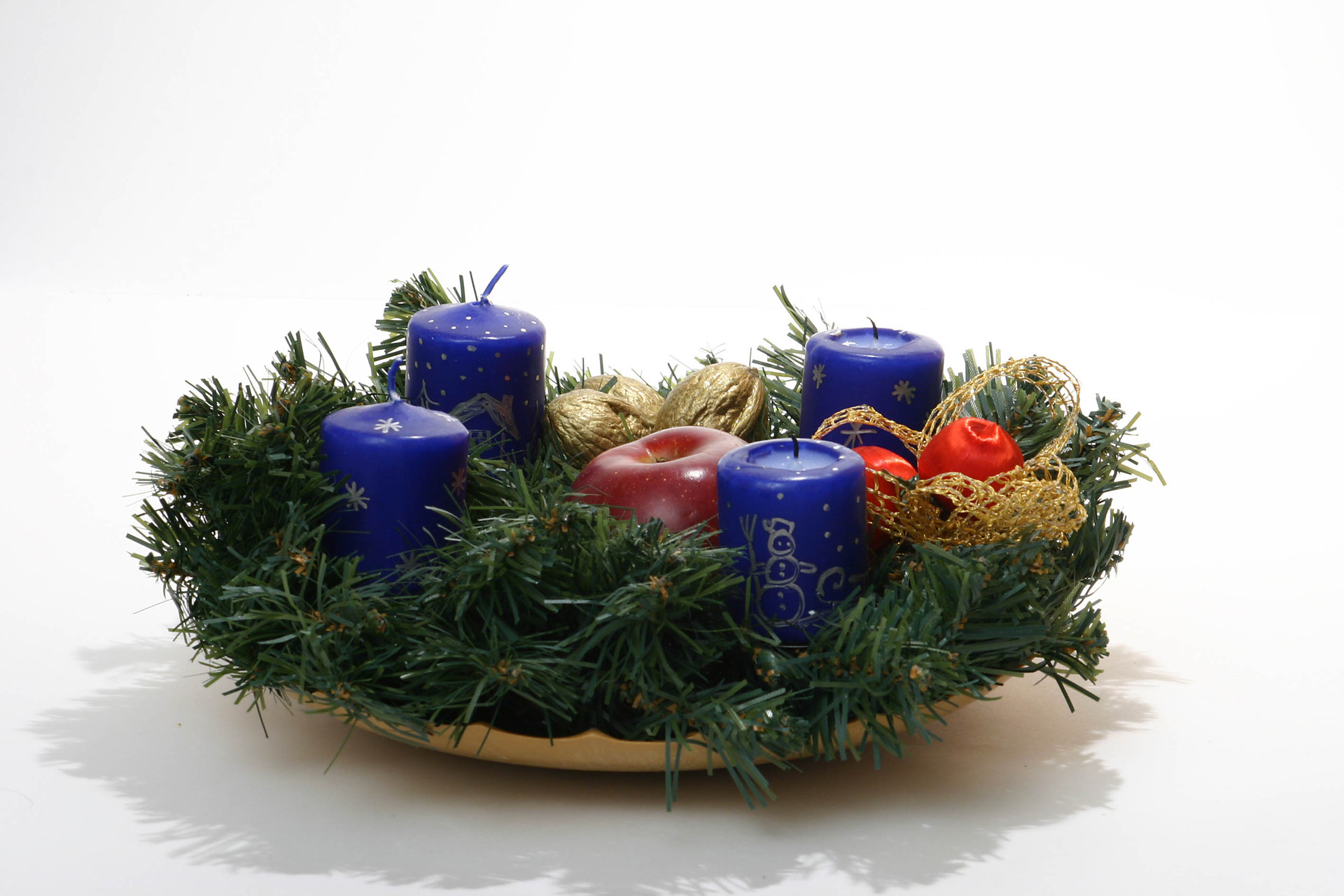
This child that Mary was going to have came from the love of God. Love is our fourth candle to be lit this week. I think this is most appropriate to be the last of the four that we light. This love for us, to receive a saviour from God becomes more powerful as each week of Advent goes by. For some of us Christmas can be a rough time, but this power of love can do more than we can ask or imagine.

Our Gospel reading for this week focuses on Joseph and his answer to God when he hears that Mary is with child. When I first looked at this reading from Matthew I looked at the NIV version so that is what I prepared for. One word in particular is added to this reading that is not in the NRSV.

Here is the paragraph from NIV

“This is how the birth of Jesus the Messiah came about: His mother Mary was pledged to be married to Joseph, but before they came together, she was found to be pregnant through the Holy Spirit. 19 Because Joseph her husband was faithful to the law, and yet did not want to expose her to public disgrace, he had in mind to divorce her quietly”

The word ‘divorce’ confused me. If Mary and Joseph were not yet married, how could they get a divorce? It turns out that the word ‘engagement’ was quite different than it is today. Marriages were arranged by the parents of the bride and groom sometimes even without the couple knowing about it. The families would enter into a binding contract and at that time Mary and Joseph would have been considered married. But the ‘honeymoon’ would not happen for what could be up to a year. This ‘time between’ is where the angels come into play. First for Mary and then Joseph in a dream.

I suppose that the dream each of them had would have been ones that they would have not forgotten when they woke up in the morning, but a dream is just a dream isn’t it? Some of them get so far fetched that you wonder where that came from and just shake it off as a dumb dream. This dream for Joseph meant he had to have faith, that it was true, as far fetched as we all would have thought it to be. (Mary was to have a child and the father of that child was of God). What amount of faith does it take for someone to say yes to this? I can’t imagine someone with just a little faith following through with it. What if Joseph had said no? God gave us free will and allows us to make our own choices, however many of us know how pushy God can be when he really wants us to go down a certain path. What would it have meant for Mary and Jesus if Joseph said no? Mary and Jesus’s life would have been a lot more difficult. Even today, it isn’t easy to be a single mom, but back then things would have been much more challenging and possibly impossible. But then again nothing is impossible with God. I suppose he would have figured out a way to have the answer from Joseph be yes eventually.

This child that Mary was going to have came from the love of God. Love is our fourth candle to be lit this week. I think this is most appropriate to be the last of the four that we light. This love for us, to receive a saviour from God becomes more powerful as each week of Advent goes by. For some of us Christmas can be a rough time, but this power of love can do more than we can ask or imagine.

Sometimes for me a certain line in a hymn, a prayer or even a story can jump out at me and stay with me for a long time. There are 14 words that we have heard on Sunday mornings recently that are so important for me.

God could not love you more than God loves you at this very moment.” When I hear these words on Sunday morning that are said with compassion, I am filled with Peace, Hope, Joy and Love.

Blessings to all of you this Christmas and always.

Readings And Collect For December 11, 2022

Collect

O God of Isaiah and John the Baptist,
through all such faithful ones
you proclaim the unfolding of future joy
and renewed life.
Strengthen our hearts to believe your advent promise
that one day we will walk in the holy way of Christ,
where sorrow and sighing will be no more
and the journey of God’s people will be joy. Amen.

Readings

Isaiah 35:1-10

Luke 1 46b-55

James 5:7-10

Matthew 11:2-11

Reflection from: Rev. Dr. W. Wayne Fraser Dec. 11, 2022

John to Jesus

All four gospels begin the story of Jesus with reference to the prophet John the Baptiser; indeed, the gospel of John refers to him almost immediately in the familiar, beautiful opening hymn: “There was a man sent from God whose name was John.” The entire opening chapter of Luke is all about the birth of John; the birth of Jesus happens in chapter two. The season of Advent focuses much on John and his mission.

Advent is about readiness to acknowledge, receive, and participate in the revolution that clusters around Jesus. As followers of the way of John and Jesus, our discipleship is to call the prodigal home, to call all God’s children to return from their exile, to call all mankind to turn around, to radically centre their lives in God’s love and to reach out with compassion to their brothers and sisters, that they might all know they are beloved of God.

This introduction of John the Baptist helps us to understand Jesus more clearly. John was an important first century prophet acting in the tradition of OT prophets; indeed, his appearance is compared to Elijah. He echoes the OT in his call for repentance: “Prepare the way of the Lord; make his path straight.” He comes offering “a baptism of repentance for the forgiveness of sins”; in doing so he openly challenges the temple authorities who saw themselves as the only authority to mediate between God and mankind. He pronounces judgment on the rulers of his time, and this opposition lands him in jail and eventually costs him his life. This anti-temple prophet, in the OT tradition, has a tremendous influence on Jesus of Nazareth.

If John and Jesus were indeed cousins, as implied, they may have played together as children, grown up together. In any case, Jesus was obviously attracted to John the Baptist; he must have heard John’s “crying in the wilderness,” and came to join him, to learn from him. We have no idea how long Jesus sat at John’s feet as a disciple, but it is logical to assume it was a good length of time for Jesus to learn from interaction with John. At some point John must have realized that his student surpassed him in wisdom and stature, for John after a time points his own disciples toward Jesus; in the first chapter of the gospel of John, Jesus’ first two disciples are plainly identified as John’s disciples. In Matthew’s gospel Jesus begins his ministry “when he heard that John had been put in prison.” From that moment Jesus began to preach, “Repent, for the kingdom of heaven has come near,” the very same words the writer of Matthew placed in John’s mouth: “In those days John the Baptist came, preaching in the wilderness of Judea and saying, “Repent, for the kingdom of heaven has come near.” Jesus picks up where John leaves off.

The gospels have John announcing clearly that Jesus is the “coming one,” echoing the language of the prophet Malachi, the last book of the Jewish Bible in Jesus’ time. The gospel writers, writing several decades after the events of Easter, portray John as the forerunner of Jesus. However, when John the Baptist is imprisoned by Herod, he sends messengers to Jesus asking, “Are you the one who is to come, or are we to wait for another?” John is obviously unsure at that point. Both the gospel of Matthew and Luke have allowed considerable time to pass before this incident, several chapters in fact, during which the reader has seen Jesus in action, preaching, teaching and healing. And Jesus answers John’s question in the language of the OT: “Go and tell John what you hear and see: the blind receive their sight, the lame walk, the lepers are cleansed, the deaf hear, the dead are raised and the poor have good news brought to them.” Jesus answers John in the metaphoric language used to describe the kingdom of God, taken primarily from the book of Isaiah, chapter 35, and also echoed in psalm 146. Jesus is not so much giving a literal summary of his ministry, as he is announcing, in his imagery, that the kingdom of God is near. The gospels of Matthew and Luke present Jesus as the fulfilment of OT messianic prophecy, as the new Moses through whom God will save his people. The OT references remind us that the gospels were written to make theological points, to interpret the experience of Jesus in light of OT understandings of God. Jesus’ actions declare the kingdom of God is at hand and he is telling John in code, through the Biblical imagery he recites, that the kingdom of God is here, that he is “the one who was to come.” Jesus reassures his teacher that he has learned his lessons well, that he is a prophet in John’s tradition, that he will build on John’s foundation.

And that foundation, as all the gospel writers make clear, is the OT prophetic voice. “Prepare the way of the Lord; make his path straight” (Luke 3:4): the gospel writers put into John’s mouth the call for repentance used at the start of Rosh Hashana, the Jewish new year. Repentance means to turn around, to alter one’s direction, to align one’s life along the righteous path that God desires. It is a call for the exile to return, for the wandering one to come home. Furthermore, John the Baptist’s words in the fourth gospel apply the imagery of the exodus to Jesus: “Behold the Lamb of God, who taketh away the sins of the world.” The reference is from the feast of Yom Kippur which ends the ten days of fasting during Rosh Hashana, when the sacrificial lamb was slaughtered and eaten. It also refers to the Lamb of the exodus which was killed and roasted, the blood smeared over the lintel to protect the inhabitants from the angel of death; however, it is important to remember that the rest of the lamb, the cooked lamb, was packed away as food for the coming journey out of exile toward the promised land. The Lamb of God as food for the journey: the emphasis can be placed not so much on the blood of the lamb to avoid death, as on the feast of the lamb to bring life. The Lamb of God travels with us, to nourish us on our way. Emmanuel: God with us. Following Jesus is about following the way—a commitment to a path of personal transformation and of confrontation with social systems which dominate and suppress people: “Make straight the way of the Lord.” Jesus learns this way from John. John the Baptist’s ministry connects Jesus to a rich OT prophetic tradition, and Jesus models himself very much after his mentor. The parallels between them are striking: both men call for repentance, both challenge the temple authorities, both pose a threat to the secular powers, and both are executed. The disciples of Jesus follow this example and they too are all executed.

The background in the introductory material of all four gospels is the mission and fate of John the Baptist. We encounter during Advent the story of the hopes around John’s birth and his proclamation: “The voice of one crying in the wilderness, ‘Make ready the way of the Lord, make his paths straight.’” No one in that time had seen anyone quite like this man John with his wild wilderness garb, his diet of locusts and honey, his language, his fierce and unaccommodating judgement and condemnation: “Oh you brood of vipers! Who warned you to flee from the wrath to come?” The gospels show how John dared to challenge the way things worked at every level–religious, personal, economic, political and social; he told all these people how to change the way they lived in light of what God was about to do. His message was so powerful and convincing and inspiring (if also fearsome!) that the people, which here implies not just those who came out to see him, but people in the region generally, started considering the possibility that John might be the Messiah. We cannot understand the way of our Lord revealed in these passages apart from the context of challenge and threat—and good news, too–posed by the message and ministry of John the Baptist. To do so is to distort what Matthew and Luke want us to hear clearly. The birth and ministry of Jesus constitute a social revolution that keeps reverberating through every time and place.

Advent is about readiness to acknowledge, receive, and participate in the revolution that clusters around Jesus. As followers of the way of John and Jesus, our discipleship is to call the prodigal home, to call all God’s children to return from their exile, to call all mankind to turn around, to radically centre their lives in God’s love and to reach out with compassion to their brothers and sisters, that they might all know they are beloved of God.

A Message From The Silent Auction Team

Snow storm
“It was a dark and stormy night….” (As you all know!).

This year’s Silent Auction was, er, somewhat of a success. Due to a heavy fall of snow, the committee had to come up with a Plan B and C! The actual night of the auction, we had 24 people brave the elements to attend, including three folks from “The Terrace” (one elderly lady with a walker!). We had the Leafs on the three Big screens, everyone put in one or two bids in, and I think everyone went home with a door prize! We opened for bidding on the Sunday to allow our parishioners, and Christ Abundant people to bid, then again in the evening (we had two people come in). Then for final bids we opened up again on Monday evening, attended by a few more people. So, it was an eventful Auction to say the least. Although all the monies have not come in (we are still selling not-bid-on items), but we’ll make over $4,000.00; not bad considering the weather, poor attendance, and so on. So we’ll do it again next year (sans snow?), and hopefully we’ll make a bit more. So thanks to the committee, and those who helped out a great deal (esp. Kelly and Erin!), those who contributed items, and those who bid. See y’all next year!
The Silent Auction Committee: Jeanette & Donald Alsop, Nancy and Ray Elder

FACS Adopt-a-Youth

Adopt A Youth

We are still in need of several items for two of our the local people we are sponsoring, and in desperate need of gift cards for our people we are sponsoring in the Northwest Territories. Our donations will be just about all these young women get for Christmas, and so I hope we can all strive to complete their wish lists. Most of the big items have been purchased, with just some smaller items being requested. However, we are still very low on gift cards for our third young woman. I need to have all gifts received by Sunday, December 11 at the absolute latest. NO late donations will be accepted, as I will be unable to get them to people we are sponsoring.

I know this is a very demanding time of year for everyone, and I so greatly appreciate everyone’s generosity, as we extend Jesus’ love into the community!
-Steff”

Advent Devotionals

Advent0 1 1427289 1920x1280 1

November 27th is the first Sunday of Advent. Advent is a time of waiting, of reflection and prayer and to help you with this we have daily devotional booklets inspired by Henri M. Nouwen to be used throughout the season of Lent. Each day has a short Bible verse, a reflection and a prayer. They are available on the table in the hall, if you are able could you please give $5.00 to help with the cost. Thank you.

Audio Visual Equipment needed

Smart TV

We would like to purchase a second microphone for the choir in order to enhance our sound both for in the church and for those watching and listening from home. We would also like to purchase a small smart TV for the nursery so that those in the nursery can follow along with the service and can know when communion is being served. If you can help with these purchases there are A/V Equipment envelopes at the back of the church please use them for your donation.
Thank you so much!

Migrant Farm Workers Ministry (MFWM)

Migrant farmworkers
We need your help!

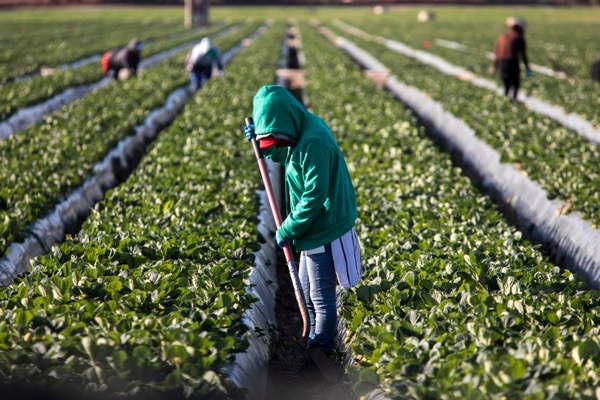
There have been significant changes in the Migrant Farm Workers Program. The workers now come year round rather than just in the summer/fall months. That means people are here in Canada during Christmas when their family is back home. Due to that the parishes of St. John’s Jordan and St. Alban’s Beamsville are putting together Christmas bags for the workers who are here at Christmas.

They will contain a hat or socks, some cookies and individually wrapped chocolates or candies.

If you are able to help provide any of these items we will need them by Sunday December 11th and you can talk to Rev. Sheila for more information.

Readings And Collect For December 4, 2022

Collect

Labouring God,
with axe and winnowing fork
you clear a holy space
where hurt and destruction have no place,
and a little child holds sway.
Clear our lives of hatred and despair,
sow seeds of joy and peace,
that shoots of hope may spring forth
and we may live in harmony
with one another. Amen.

Readings

Isaiah 11:1-10

Psalm 72:1-7, 18-19

Romans 15:4-13

Matthew 3:1-12

Reflection for December 4th 2022 The Rev. Donald Brown

ADVENT 2—Today’s Gospel reading is from Luke 3: 1-6

Simply, John the Baptist arrives on the scene—administering a baptism in the Jordan calling people to repent—to turn from their current path to faithfulness to God. John grew up with Jesus and thus had a firm idea of what Jesus’ prophetic ministry was about.

Now water cleansing for the forgiveness of sins had its roots in the OT and a long tradition with the people of Israel—but the word baptism came to us from the Greek in the NT baptizo, to dip and described the physical act not the underlying spirituality.

For Jesus, God was immanent, present, now in our midst. The term that might describe this is ***Godness***, where we find the presence of God.

This was an adult rite, a believer’s baptism, a tradition carried on in many Christian communities. Most of us and our children were baptized as infants (a topic for another day). One thought I had was that there is no evidence in the NT of a repeated act of repentance such as one might find in the church’s practice of weekly and or daily confession of sins (also a topic for another day).

The Gospel is the Good News brought by Jesus and that Good News is that the presence of God is at hand, or in language from the OT the Kingdom of God is at hand.

That is the Good News taught and practised by Jesus that God is with us and that loving neighbour is loving God. We need to take care that we listen to and follow the faith of Jesus; what did Jesus say and do? and what did he teach about God?

Unfortunately Christianity has been and continues to be more focussed on belief in Jesus and interpreting his death as a substitution for the sins of humanity, developing doctrine and liturgy with that sole focus and losing sight of that Gospel. Or presenting the Good News only as Jesus death and resurrection.

The Gospel or Good News is about the presence of God in our everyday lives, this is what Jesus taught and lived.

So where is God? When we think of war, poverty, oppression and injustice, we call on God but it is my firm belief that God will not selectively intervene in the laws of nature or the free will of humanity. Up until Jesus taught that the presence of God is in our midst, scripture described a transcendent God, a God coming from up there or out there and many people still think about God as separate and above.

For Jesus, God was immanent, present, now in our midst. The term that might describe this is Godness, where we find the presence of God.

God, that presence, is in the earth, the sky, and the sea, and in all living things. All things, the earth, the sky, the planets, the cosmos are made of God. They flow from God and this means they are made of God, not our familiar ‘made by God’.

We, humans, are not separate creations but part of the continuum of God creating we are items of Godness just as the earth, sea, sky, and all living things. Thus somewhere in our heart/brain/soul is the creative spark of divine life. All the great religions of the world, Hebrew, Christian, Muslim, Hindu and Buddhist given credence to humanity’s quest to be open to oneness with divine life.

Much of humanity might live in blindness about that divine spark, about who we are and where we are going, how we can find hope, peace, and justice when the powers of evil and death rage about us.

The task or challenge for us during this season of waiting and hoping is to find that spark, nurture it, and share it, in our quest to follow the Way of Jesus.